

How To Play D Minor Bar Chord
One of the easier open cord chords, D pocket-size sits comfortably nether the fingers. For the basic open string shape we prefer finger four to finger 3 on the B cord, because it is more compact and leaves finger three available for quick changes to Yard major. Try it both ways and see what y'all think.
- READ More: Chord Clinic: Learn to play 10 interesting A minor chord variations
D modest is a reasonably mutual key for songwriting – as an example, check out The Kinks' Sunny Afternoon with its long descending bassline intro. Usefully, D minor is also chord II in C major and chord VI in F major.
A four-notation chord, the high position of D small-scale means that it'southward fairly lightweight, but this can exist fixed by using drop D tuning, where the depression East cord is tuned down a tone to D. In drib D the open up sixth string could be added as a bass note to most of the following shapes.
The notes of D pocket-sized are D, F and A, which are the root, minor tertiary and perfect fifth. These are steps ane, three and five of a D minor scale. Depending on the shape, y'all could try experimenting with adding the open E or B cord to these chords, giving y'all either D minor add nine or D pocket-sized sixth.
This is the last Chord Clinic column in its current course, but we promise you've enjoyed getting to grips with the myriad interesting shapes and inversions this column has brought to y'all over the years – happy chording!
Effigy 1
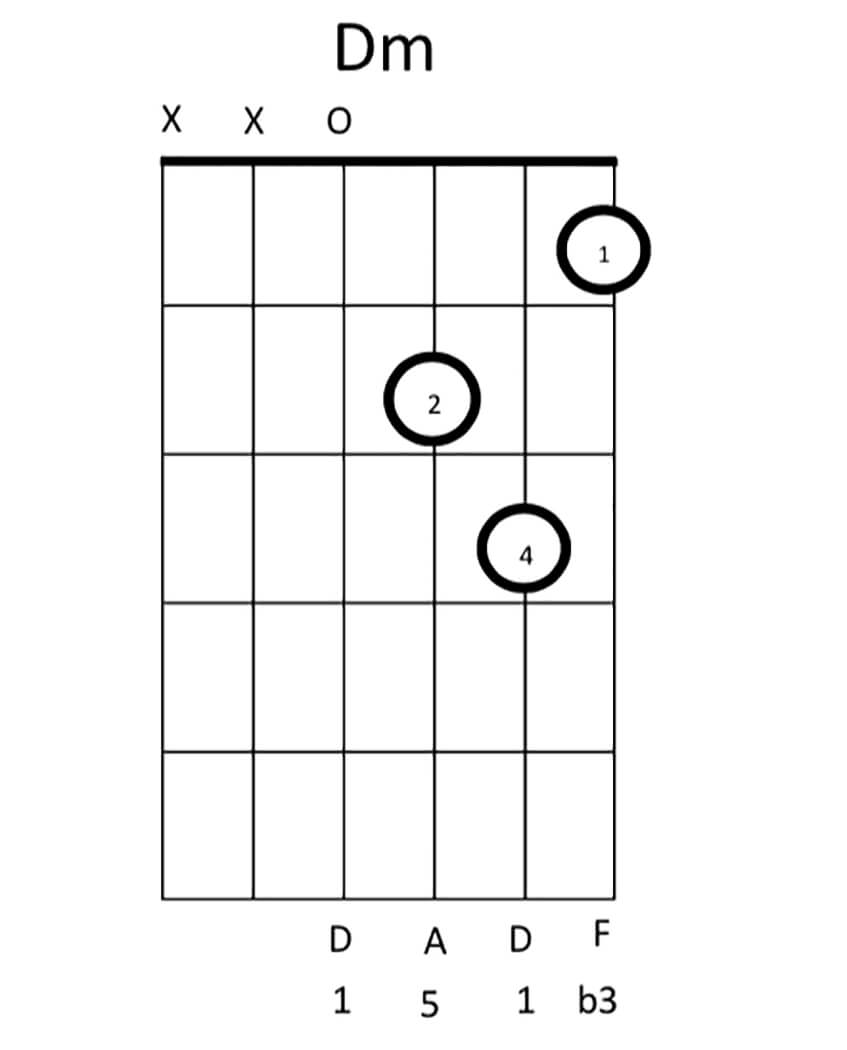
Mute the low Eastward cord by allowing your thumb to come over the summit edge of the neck. If you are strumming, try to concentrate on the acme four strings. You can get abroad with the open A occasionally, but the E merely doesn't go unless you're in drop D.
Figure 2
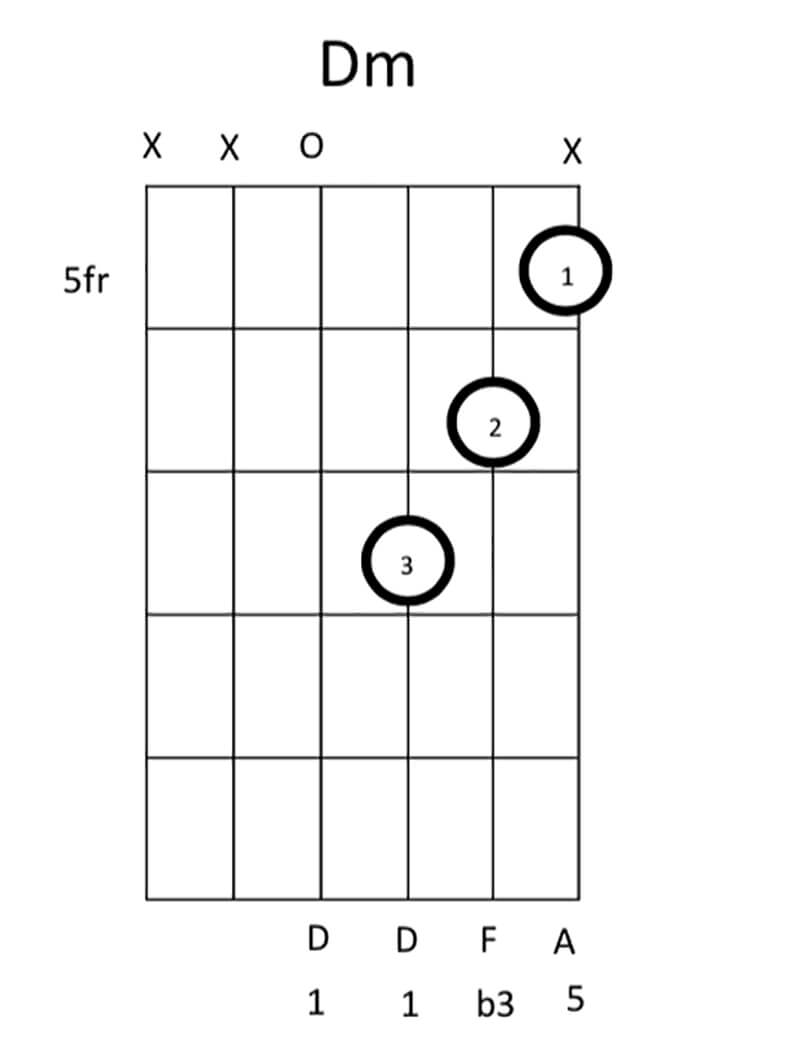
Taking each note of figure 1 up the neck to the adjacent note of the chord gives you a sparkling and chiming voicing at the fifth fret. If you lot leave out the open up bass notation the top three strings give you a root position chord and sound sweet equally delicate arpeggios.
Figure 3
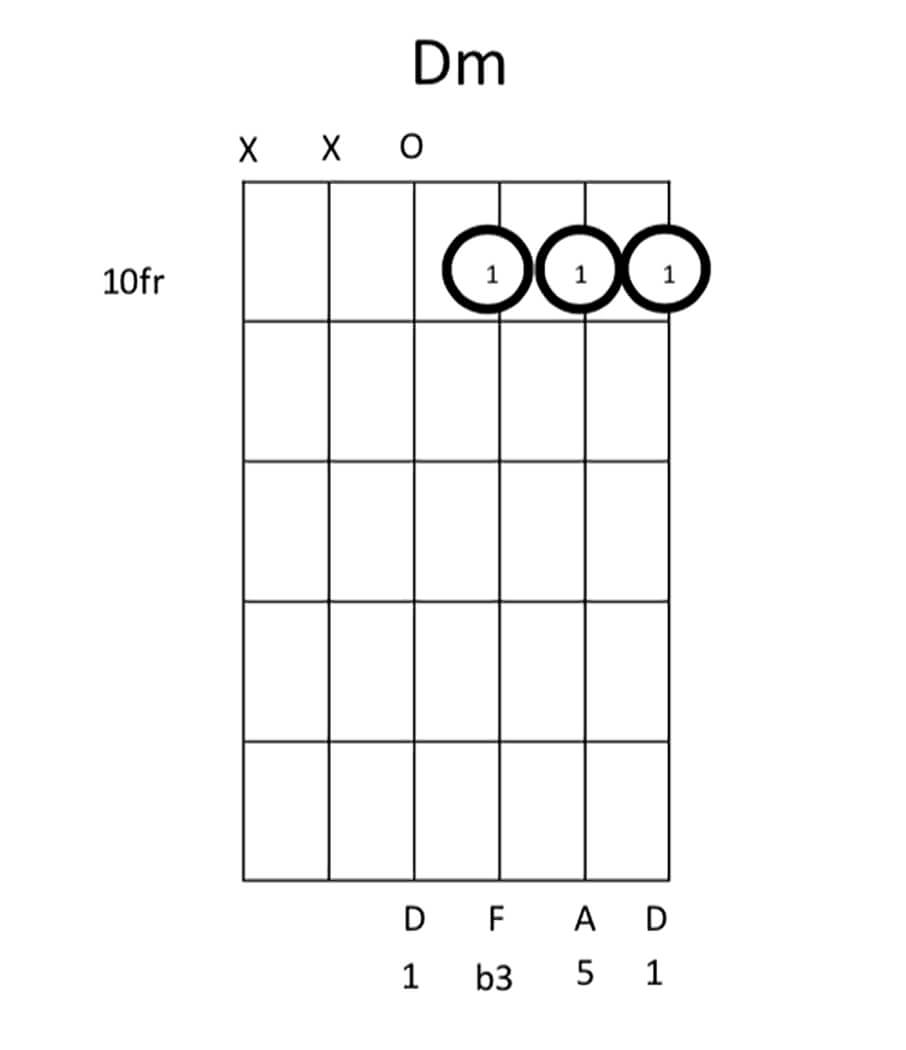
Moving up the cervix once more, a half bar across the 10th fret adds fifty-fifty more sparkle and chinkle. In this position the top three strings requite you a offset inversion chord, with the third in the bass. Try finger picking arpeggios while moving betwixt figures one, two and iii.
Figure 4
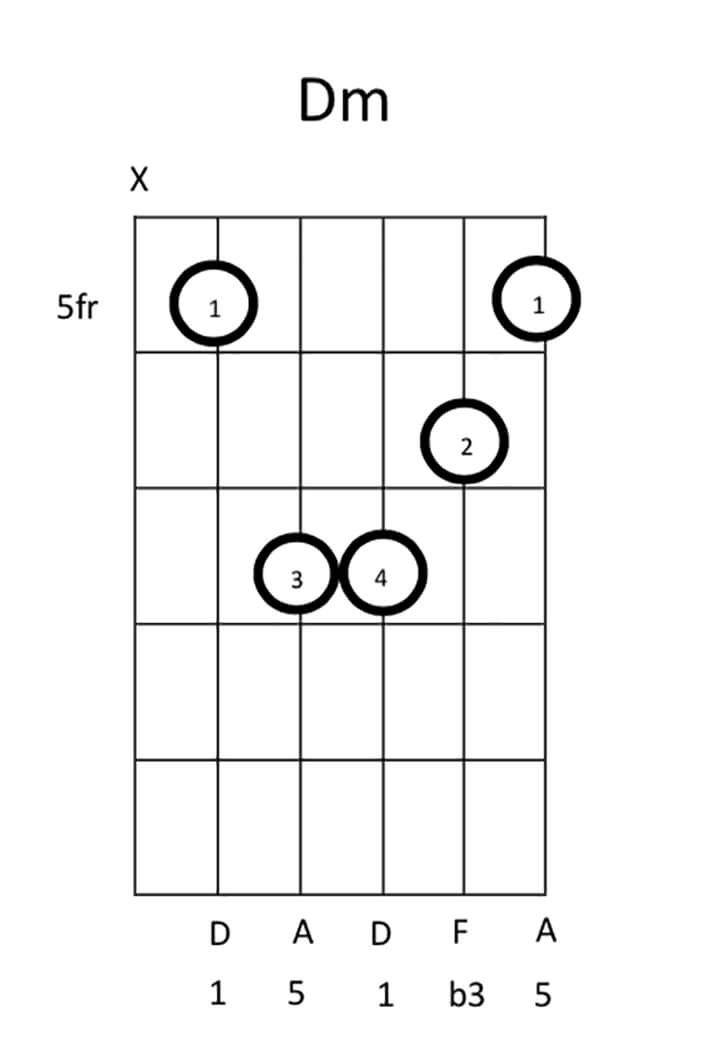
D modest works well as a barre chord at the fifth fret, and you should try hammering-on fingers ii, three and four while property downwardly the barre. Then experiment with occasionally releasing the pressure level on the strings for some funky percussive strumming.
Figure v
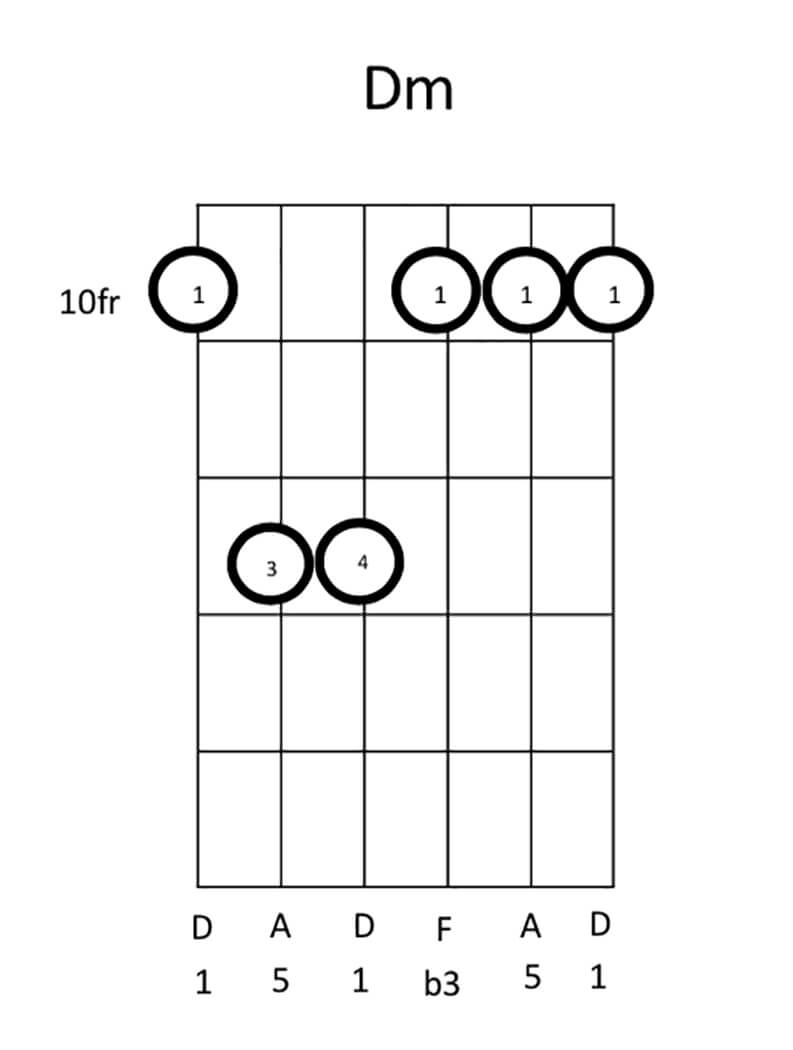
Hither nosotros take the other movable bar chord version of D pocket-sized, based on the open up Eastward modest shape. Doing a barre this high upwardly the neck can be catchy on some guitars as the trunk gets in the way, simply you should be fine on most electrics and 14 fret acoustics.
Figure 6
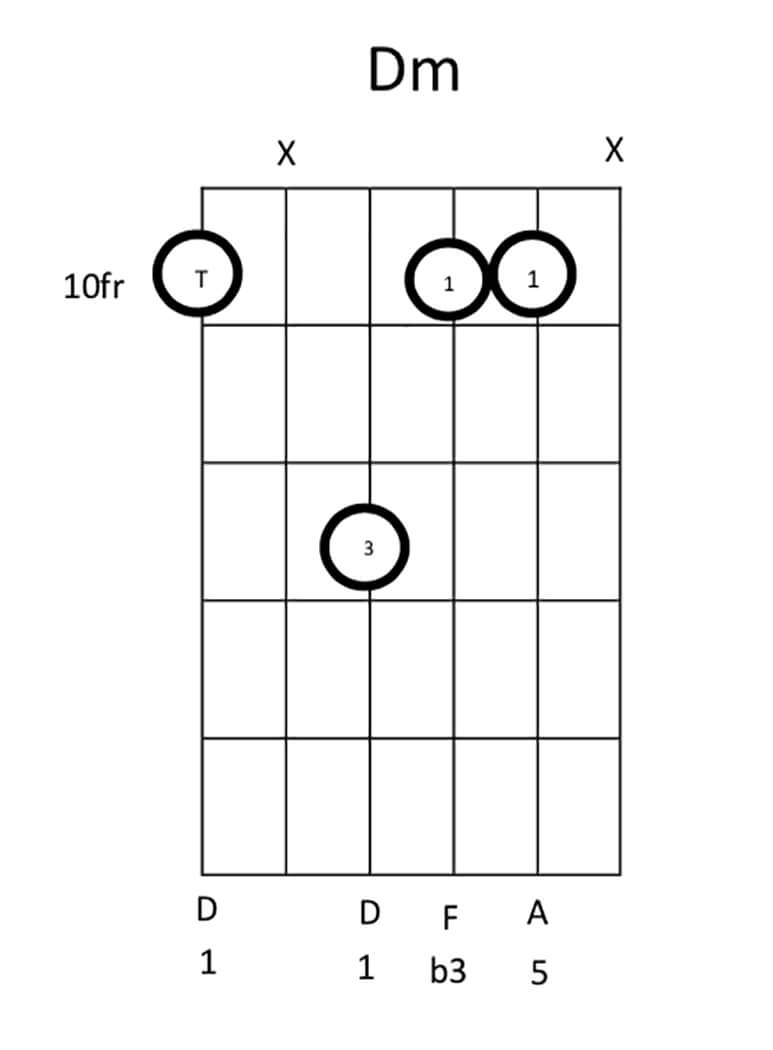
This shape removes the surplus notes from figure 5 and uses the thumb over the fingerboard to concur down the East cord. If that is bad-mannered for you, apply fingers one, 2 and iii at the tenth fret and finger four at the twelfth fret. Mute the unwanted strings with the undersides of the fingers.
Figure 7
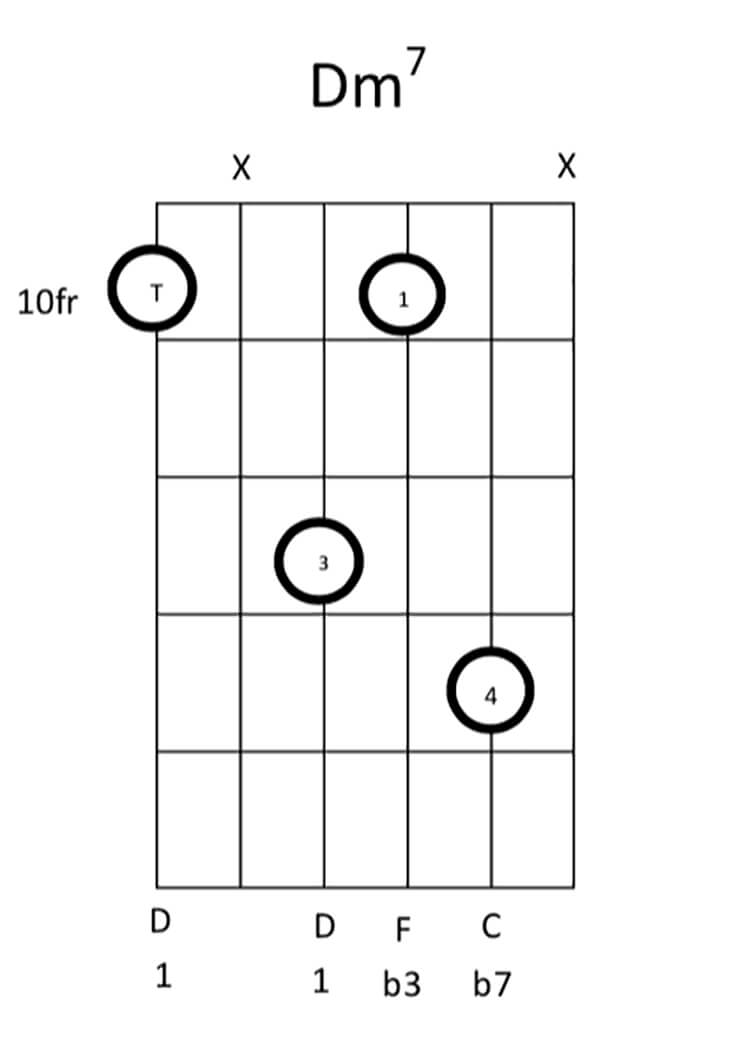
Staying with "thumb-over" chords for a moment, we've added the note C on the B string. C is the small seventh, and when added to D minor it creates a chord of D minor 7. The small 7th is the note most frequently added to a minor chord.
Figure viii
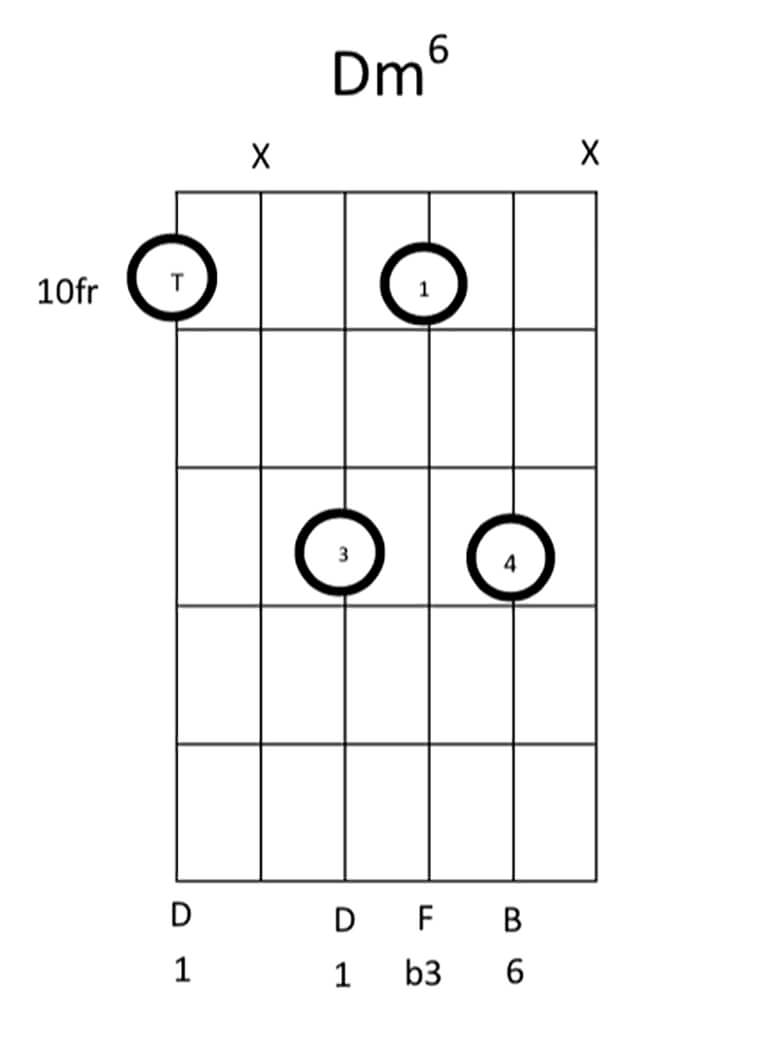
Sliding the little finger ane fret lower in pitch gives you lot the note B, which is the major sixth over the root note and produces a D minor six chord. Simply to be clear, D pocket-size vii is made past adding the minor seventh, but D pocket-sized six adds the major sixth.
Figure 9
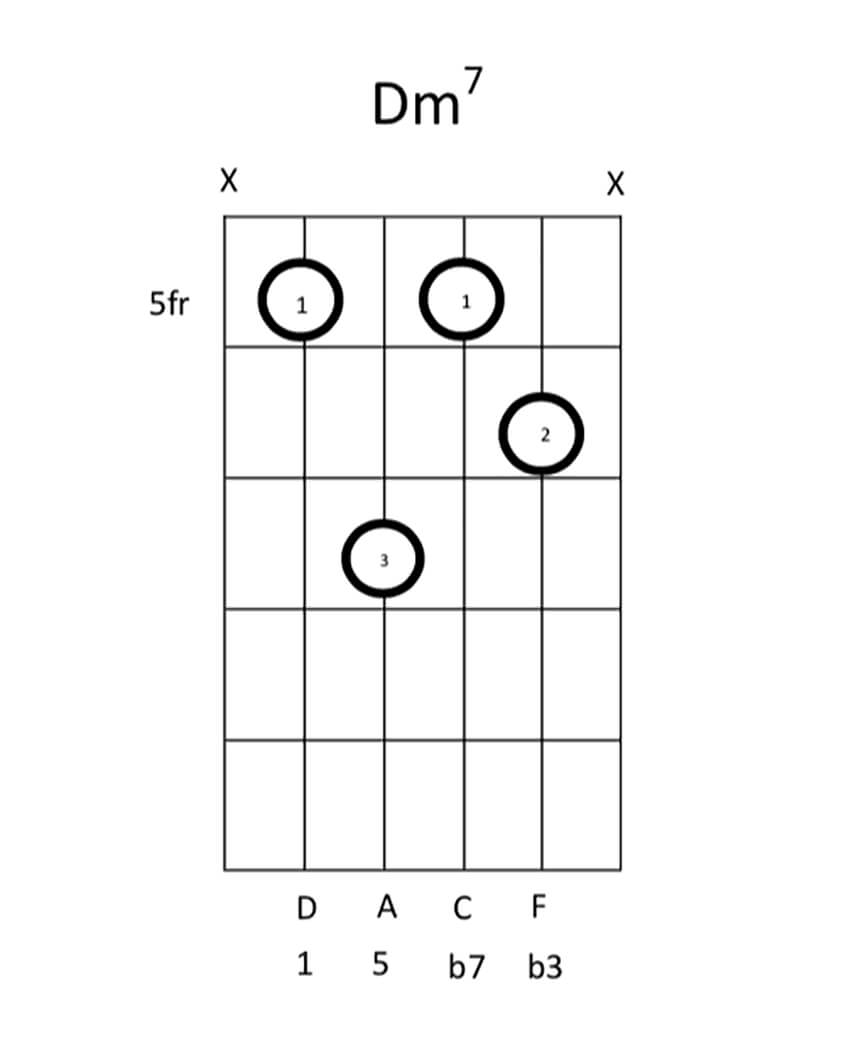
Here nosotros have a thicker voicing of the minor seventh, with the added C an octave lower. Hold the barre while hammering-on with fingers two and three. So try releasing the fret paw pressure level to mute the strings with the index finger and go your percussive strumming up to scratch.
Figure 10
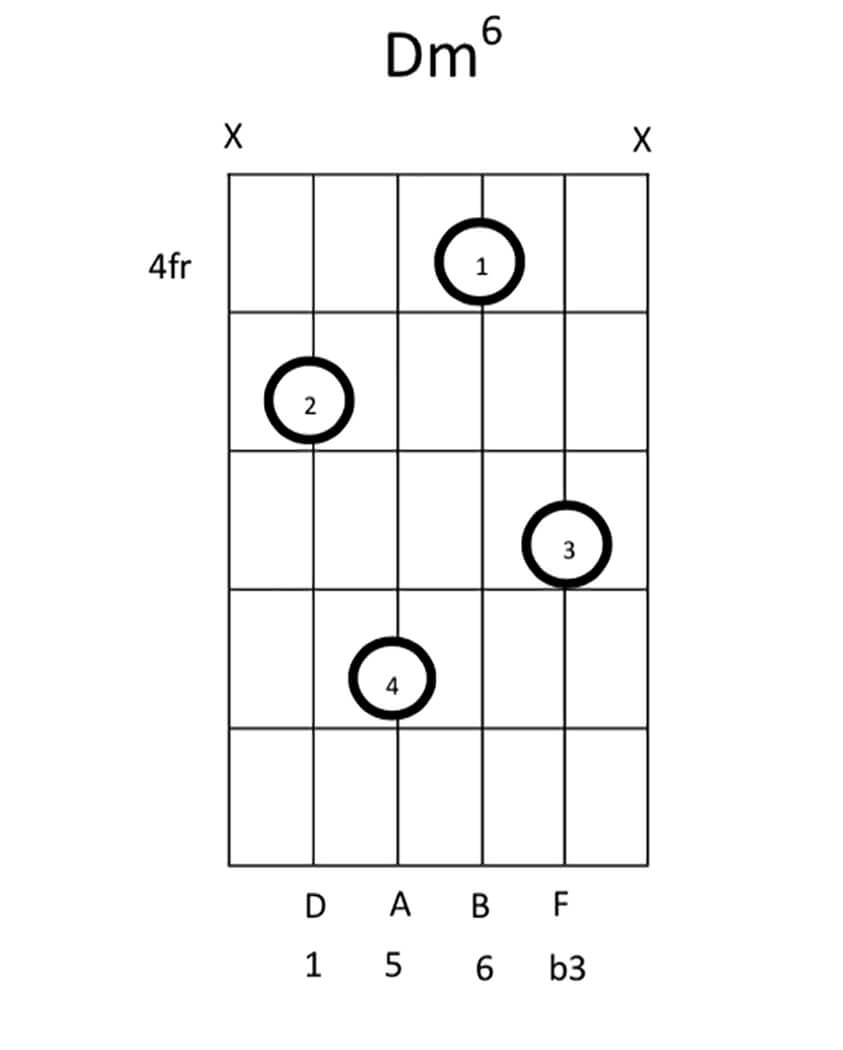
This might non be the near comfortable chord to wrap your fingers around, but here we have the minor 6th in the lower voicing. Letting the tiptop Due east open string sound likewise will give you D pocket-sized half dozen/9, which sounds mysterious and evocative with all kinds of fingerpicked arpeggios.
Well-nigh the author
Rod Fogg is a London-based guitarist, teacher and writer. He is the author of The Ultimate Guitar Course (Race Point 2014), the Electric Guitar Handbook (Backbeat, 2009) and contributed to bestseller The Totally Interactive Guitar Bible (Jawbone Publishing, 2006).
Detect out more at rodfogg.com.

How To Play D Minor Bar Chord,
Source: https://guitar.com/lessons/beginner/chord-clinic-d-minor-variations/
Posted by: cunninghamferse1978.blogspot.com
0 Response to "How To Play D Minor Bar Chord"
Post a Comment